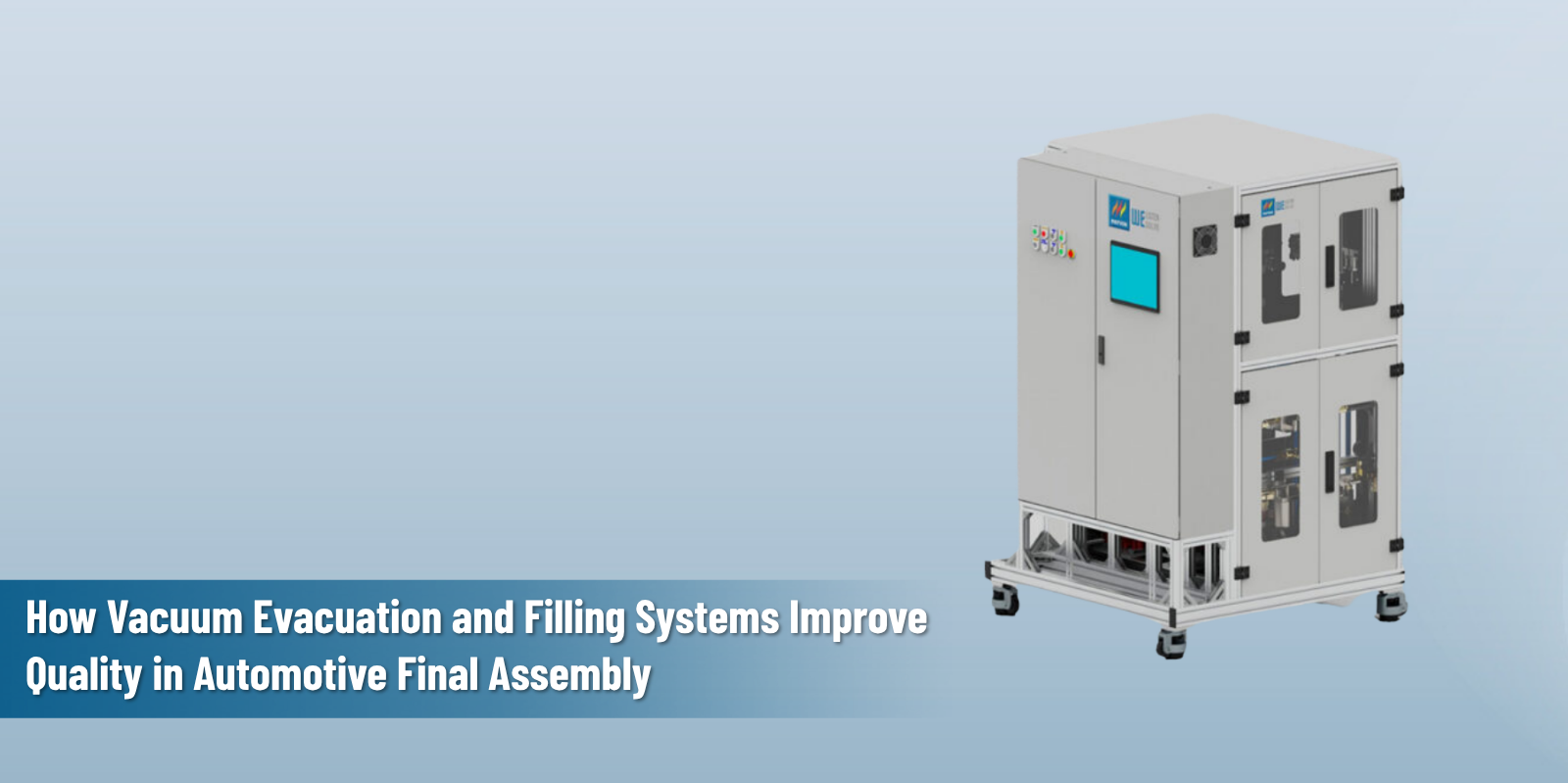
When a vehicle reaches the final stage of assembly in automotive manufacturing, final touches such as fluid filling are applied. Even small amounts of trapped air during this step affect vehicle performance. This is where vacuum evacuation and filling systems become indispensable for automotive OEMs. These systems eliminate air pockets before filling them with fluid.
Modern automotive OEMs use advanced vacuum filling systems together with leak testing to improve filling quality and detect sealing issues early. Fluid handling systems help manufacturers improve product quality. Coolant filling machine, brake oil filling machine, and AC gas charging machine all require premium fluid handling systems.
What Are Vacuum Evacuation and Filling Systems?
A vacuum evacuation and filling system helps remove air from an automotive fluid circuit before filling. For instance, filling brake systems with oil. Creating a vacuum inside the system allows fluid to flow evenly without air getting trapped.
The process is used during automotive assembly line operations to fill cooling systems, brake systems, air conditioning systems, transmissions, and other fluid-filled components. It works by ensuring accurate fluid levels and reducing incomplete filling errors. It also supports faster production while maintaining consistent quality. With properly designed fluid handling systems, manufacturers can improve process consistency and overall performance.
If you’re looking to understand the working principle, components, and benefits in greater detail, read our comprehensive guide to automotive evacuation and filling systems.
Why Quality Matters in Automotive Final Assembly
Fluid filling is always the last process before the final inspection and dispatch. Any last-minute error can delay the delivery schedule or the release of a faulty product. Trapped air can affect the cooling system, reduce heat transfer, and impair engine performance. Incorrect brake fluid levels can affect braking efficiency, while incorrect refrigerant charging can reduce air-conditioning performance.
Filling systems help manufacturers avoid these issues by delivering the correct amount of fluid every time. Combining vacuum filling with leak testing is a reliable way of meeting high-quality standards on the production line.
To understand the different methods and importance of leak detection in manufacturing, explore our guide to leak testing equipment.
Key Ways Vacuum Evacuation and Filling Systems Improve Assembly Quality
Benefit | How It Improves Quality |
Removes trapped air | Vacuum evacuation removes air before filling, reducing air pockets that can affect system performance. |
Accurate fluid filling | Delivers the required quantity of coolant, brake oil, or refrigerant with high accuracy. |
Better leak detection | A stable vacuum makes leak testing more reliable by identifying sealing issues before filling begins. |
Consistent production | Every vehicle receives the same filling process, improving quality across the entire automotive assembly line. |
Reduced rework | Correct filling the first time lowers repair, inspection, and rework requirements. |
Faster production | Automated filling reduces cycle times without compromising quality. |
Less fluid wastage | Controlled filling minimises spills and overfilling, improving material utilisation. |
Applications of Vacuum Evacuation and Filling Systems
Vacuum filling technology is in demand across multiple stages of automotive manufacturing.
Application | Purpose |
Coolant filling machine | Removes air before filling the engine cooling system. |
Brake oil filling machine | Ensures complete filling of brake lines without trapped air. |
AC Gas charging machine | Evacuates moisture and air before charging refrigerant into the air conditioning system. |
Power steering filling | Fills hydraulic steering systems accurately while preventing air pockets. |
Transmission oil filling | Delivers the correct oil volume for smooth transmission performance. |
Radiator and EV battery cooling systems | Ensures proper coolant circulation in electric vehicle battery packs. |
Features That Improve Quality and Assembly Line Consistency
Automatic Vacuum Generation
In this system, a vacuum is created even before the filling begins. It removes trapped air and ensures the system is ready to be fluid-filled.
Precise Fluid Measurement
Filling the exact amount of fluid as per requirements demands accuracy. This system ensures consistent fluid filling measurements are maintained.
Integrated Leak Testing
Many systems perform leak testing before the filling process starts. If a leak is detected, the component can be repaired before fluid is added.
Digital Process Monitoring
Digital process monitoring tracks vacuum levels, filling pressure, and cycle status in real time, helping operators maintain process consistency and quickly identify any abnormalities.
Easy Integration
Vacuum filling equipment can be integrated into existing assembly line automation systems with minimal disruption. It works effectively for both existing and new production lines.
Selecting the Right Vacuum Evacuation and Filling System
When selecting a system, manufacturers should consider:
- Compatibility with different automotive fluids
- Filling accuracy and repeatability
- Cycle time requirements
- Integration with existing automation systems
- Built-in leak testing capability
- Ease of maintenance and operation
- Support and after-sales service
Working with an experienced supplier like Patvin ensures the system meets your exact production needs. Patvin’s Fluid Handling System solutions are designed to support accurate filling, improved process control, and reliable production across modern automotive assembly lines.
For a broader understanding of how these solutions improve manufacturing efficiency across industries, read all about Fluid Handling Systems.
Conclusion
To maintain the long-term performance of your vehicle, vacuum filling systems help by removing trapped air. It improves filling accuracy and supports leak testing during the final assembly line.
For automotive OEMs, modern fluid-handling systems help reduce rework, improve production consistency, and support efficient assembly-line automation. Investing in the right solution helps maintain quality while keeping production running smoothly. Explore Patvin’s vacuum evacuation and filling machines to find solutions designed for accurate fluid filling, reliable leak testing, and seamless integration with modern automotive assembly lines.
FAQs
A vacuum evacuation and filling system removes air from a component before filling it with coolant, brake oil, refrigerant, or other fluids. This ensures complete filling and improves system performance.
Vacuum filling removes trapped air, improves filling accuracy, reduces defects, and helps maintain consistent quality across the automotive assembly line.
These systems are commonly used for coolant, brake oil, refrigerant, transmission oil, power steering fluid, and battery cooling fluids in electric vehicles.
Leak testing identifies sealing issues before fluid filling begins. This prevents fluid loss, reduces rework, and improves vehicle reliability.
Assembly line automation improves accuracy, reduces manual errors, shortens production time, and ensures every vehicle follows the same filling process.
Modern fluid-handling systems improve filling accuracy, reduce waste, support quality control, and help automotive OEMs maintain efficient, reliable production.