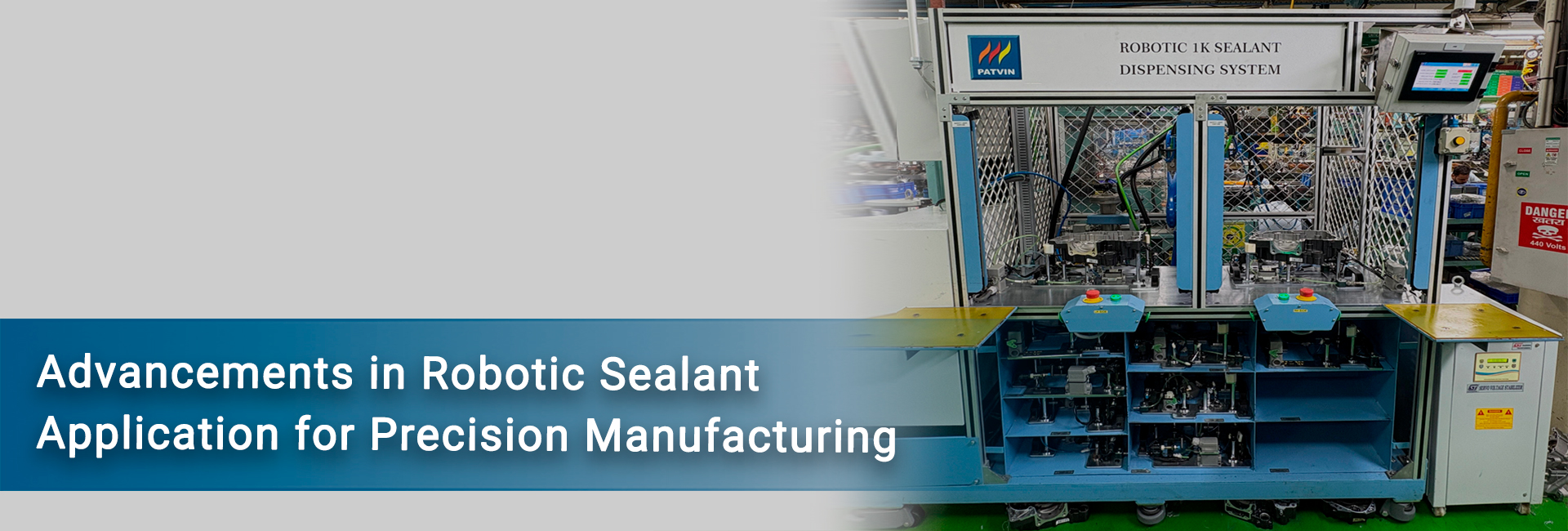
High-viscosity sealants can cause problems in production when not handled correctly. A properly designed dispensing system controls the flow, mixes material accurately, and keeps the right temperature. Automation reduces waste, prevents trapped air, and improves product quality.
Introduction
Thick sealants and adhesives do serious heavy lifting in construction, manufacturing, and maintenance industries. Their primary role is to join, seal, and also protect parts from vibration and heat.
However, these materials are difficult to handle because they are dense, sluggish, and resistant to flow. If forced through an unsuitable system, they resist movement and create process instability. Selecting the right sealant system is essential as it helps the process run smoothly. This has a direct impact on cost, quality, and longevity. This blog explains everything you need to know to choose the right sealant system for high-viscosity materials.
Understanding High-Viscosity Materials in Industrial Applications
Industrial adhesives and sealants with high viscosity are thick and do not flow easily. Typical examples are filled gap sealers, structural epoxies, silicone seals, and polyurethane compounds. Many feature solid particles for strength or durability. That makes them even stronger.
Industries use these sealants because they help to fill wide gaps and resist heat, chemicals, and moisture. They stay in place after application and create strong, durable bonds.
For example: In automotive plants, sealants are used to bond windshields and seal body seams. In electronics, they protect circuit boards while they seal expansion joints in construction. Their thickness makes high-viscosity sealants difficult to handle. They can cling to hoses, trap air during mixing, and resist flow. Some materials will spread under pressure while others remain stubbornly in place. Manufacturers must understand each material’s behavior before selecting tools or dispensing systems.
Why Sealant System Selection Matters for High-Viscosity Materials
Poor system selection causes major production issues. Insufficient pump force causes erratic material flow. The system may even overstress hoses or change their material. Incorrect ratios in two-part materials can compromise curing, leading to production delays, part rejections, leaks, and weak bonds.
A suitable system prevents these problems. It promotes smooth flow and accurate blends. In addition to controlling temperature, it keeps air out. This leads to stable output and consistent product quality. Selecting the correct adhesive dispensing system is less about convenience and more about control.
Key Challenges in Dispensing High-Viscosity Adhesives
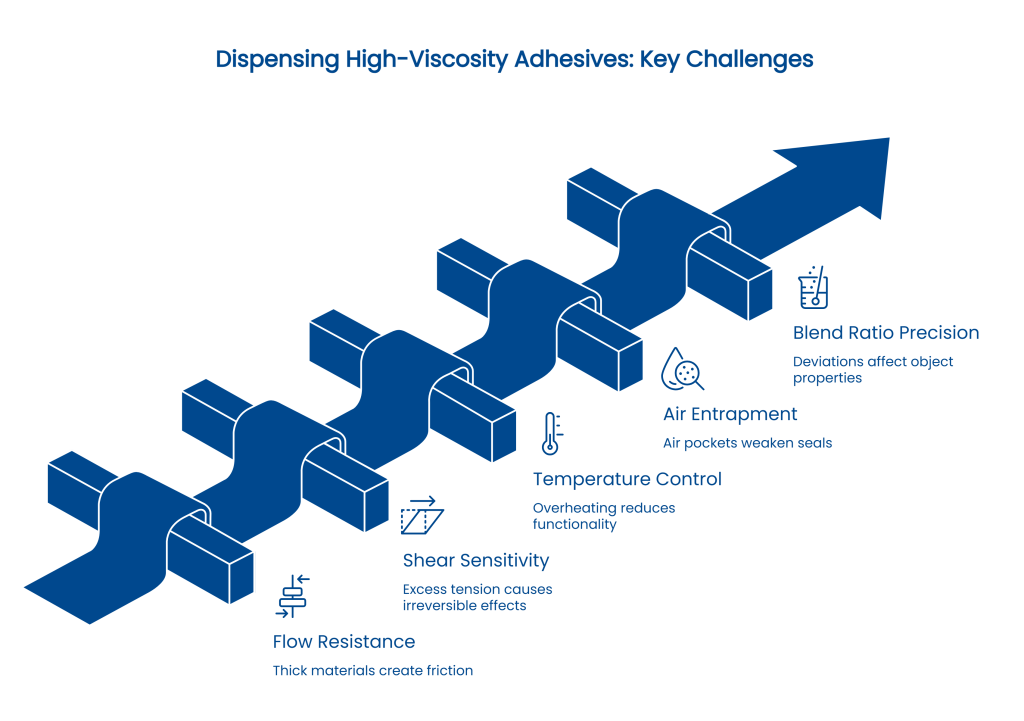
Handling dense materials often comes with predictable obstacles. Some of the common challenges are:
Flow resistance
Thick materials create significant friction, and narrow hoses can easily restrict flow. Long piping further slows production. While increasing pressure can help, it’s limited by the equipment’s safe operating capacity.
Shear Sensitivity
Some materials move more easily when forced. Excess mechanical tension might cause irreversible effects. Pumps must match material behavior.
Controlling Temperature
Many high-viscosity materials flow better when slightly heated. However, overheating may reduce functionality or operating time. Temperature must be monitored closely during production.
Air Entrapment
Air pockets weaken seals. Correct mixing and pouring methods reduce this risk.
Blend Ratio Precision
Controlling two component system proportions is crucial. Even minor ratio deviations can affect an object’s hardness, strength, and curing speed.
Factors to Consider When Choosing a Sealant System
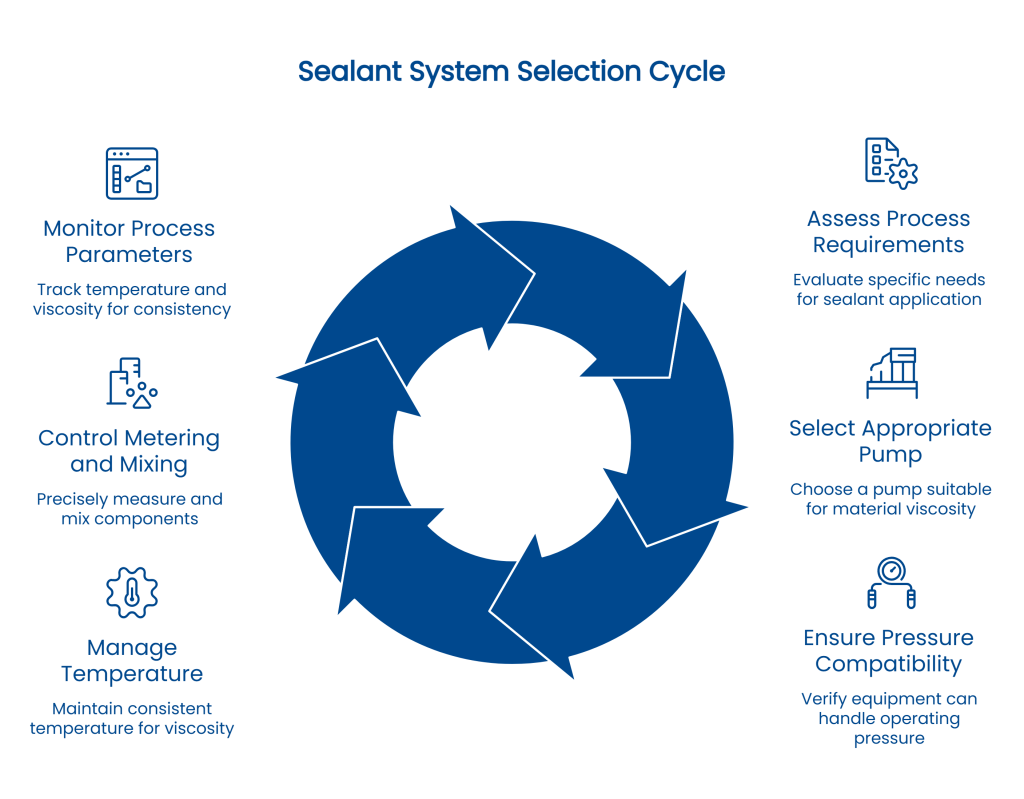
Process engineers must base sealant selections on actual process requirements rather than guessing. When selecting a sealant system, one should always place a focus on quantifiable parameters. Some of these factors are:
Bore Dimensions
Larger interior diameters reduce friction. This frequently enhances flow better than pressure alone.
Correct Pump Selection
Positive displacement pumps give exact volumes, making them ideal for thick materials. The material should be able to endure the high pressures that the pump must handle.
Pressure Scale
It is important to make sure that the hoses, couplings, and seals can consistently keep the needed operating pressure. Operators must not exceed the capabilities of any equipment.
Manage Temperature
Install technologies that maintain a consistent temperature when heating. Avoid heat imbalance.
Metering and Mixing Control
Two-component substances require precise measurement. Systems that continuously monitor viscosity and flow outperform manual examinations.
Process Monitoring
Temperature and storage can affect the viscosity of adhesives and material thickness. Inline monitoring ensures manufacturing consistency.
Role of Automation in High-Viscosity Sealant Application
Industrial automation delivers consistent results. Robotic dispensers apply sealants with precise speed and pressure, ensuring even application that’s difficult to achieve manually. These systems continuously monitor temperature, flow rate, and viscosity, instantly adjusting to any change. This improves repeatability and cuts down on mistakes. Modern factory automation systems are useful in places that value uniformity.
Improving Production Efficiency with the Right Sealant System
The system should be configured to maximize material utilization and process efficiency. A good sealant system makes sure that production is steady, cuts down on material waste, stops air pockets from forming, cuts down on downtime, and makes maintenance easier. Consistent viscosity control ensures process stability by stopping the overuse of fillers or solvents. This predictability makes it easier to plan production and saves money by reducing waste and increasing operational uptime.
Common Mistakes to Avoid When Selecting Sealant Systems
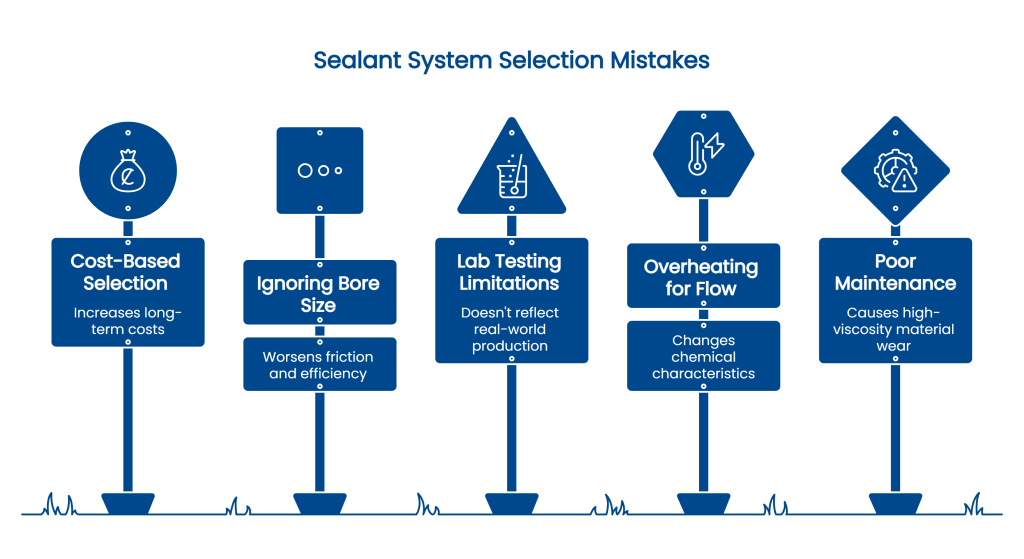
Some common mistakes made in production are:
- Cost-based equipment selection can increase long-term costs.
- Ignoring bore size limits makes friction and efficiency worse.
- Laboratory testing does not account for real-world production situations.
- Overheating for forced flow can change chemical characteristics.
- Poor maintenance planning can cause high-viscosity material wear; regular examination prevents failure.
Avoiding these errors is essential for process stability.
How the Right Sealant System Supports Long-Term Performance
Improving the quality of the end product requires a stable dispensing process. Correct application for even bond lines, correct curing for mechanical strength, and controlled viscosity for reliable closing are all important parts. Fewer product failures, fewer warranty claims, meeting quality standards, more trust from customers, and constant performance due to consistent processing are some of the long-term benefits.
Conclusion
Improper sealant handling can weaken joints, increase repair costs, and disrupt production stability. Mistakes in flow or mixing could make the system less reliable. Using the right tools and a properly engineered sealant application system, backed by Patvin’s expertise, ensures accurate output and long-term process stability. You can expect outcomes with reliable sealing and consistent performance.
With Patvin, manufacturers can reduce waste, prevent downtime, and extend the lifespan of both products and equipment. If you value consistent quality and waste reduction, Patvin can help you get there. Contact Patvin now to discuss smarter, more controlled sealing solutions!